Personal Brand – Build Consciously

December 28, 2021 in Uncategorized

We all have a personal brand whether we know it or not. It’s what people think when your name is mentioned, what pops up on Google when someone searches for you, and your presence across social media. It’s important to craft your personal brand strategically and build one that helps advance your career and your life.

What Is A Personal Brand?

While most people think of businesses when they think of a brand, all individuals also have a brand.

Think of it as what people say and think about you. It encapsulates your talents as well as who you are, and it’s how you can differentiate yourself from others. Your brand is both what you stand for and what you do.

The best personal brands are unique, authentic, and trustworthy. They build a strong reputation about you that can help you personally and professionally.

Why Should You Build A Personal Brand?

Since your personal brand captures who you are and what skills you bring to the table, it helps you make powerful connections and leads to new opportunities. You’ll be surprised who starts contacting you when you’re intentional about crafting your brand. But there’s more to it than this.

As of 2020, 43% of the US workforce is made up of freelancers and contract workers. If this applies to you, a personal brand can help you land clients and bring in a larger paycheck. It helps establish your credibility and trustworthiness, and it also enables clients to find you.

Further, according to a CareerBuilder survey conducted in 2018, 70% of employers screen candidates by checking their social media, and 43% use it to check on current workers.

If you’re looking for a job, having a positive and strategic online presence could make or break your candidacy. Considering the average tenure for an employee is around four years, you’ll likely be on the job hunt at some point, so it’s a smart idea to get to work on a personal brand before you need it.

With all of this in mind, let’s dive into how you can begin building a powerful personal brand.

Steps to Build Your Brand

Here are the top seven ways to build a personal brand that shines.

  •  Figure out who you are and what you want to accomplish

Since you want your personal brand to be an honest reflection of who you are, what skills you possess, and what your aspirations are, it’s critical to determine this information. Think deeply and be authentic.

You can start by asking yourself:

  1. What drives me?
  2. In what areas do I excel?
  3. What work drains my energy? What work fuels me?
  4. What settings do I work best in?
  5. What industries do I find interesting?
  6. Where do I want to be at the end of my career?
  7. What impact do I want to have?

Even if the answers to these questions change over time, that’s okay. Your personal brand evolves as you do, so it’s critical that you be honest now and accept that your image may change over time.

If you aren’t sure how to answer these questions, ask friends, coworkers, and family for their input. Even if you’re confident in your answers, it may be a good idea to consult others. They see you in a way you can’t see yourself, and it can help you build a more holistic image of yourself.

Once you’re aware of these different parts of yourself, you can begin crafting an image that aligns with it and helps get you where you want to go.

Doing so also attracts like-minded people who are driven by the same things as you or who see value in what you offer. This creates a stronger network.

  • Determine your unique value proposition

Leveraging your differences is critical for brand-building. If you’re similar to everyone else out there, your personal brand won’t truly be personal. People remember those who stand out.

That’s where your unique value proposition comes into play. It is a short statement that encapsulates what you uniquely offer that no one else does.

When it comes to defining your unique value proposition, there are two steps you should take:

  1. Understand your strengths. Ask yourself where you’ve excelled in the past. Consider what compliments others give you and what they deem to be your talents. Determining what you do better than most anyone else lays the foundation for your unique value proposition.
  2. Talk about these strengths.By taking stock of your strengths, you can build your brand around them. Share your expertise and highlight your achievements. All of this builds credibility and establishes trust, so if an employer is considering you or if you’re looking to land a client, they can tell through your brand that you’re the best person to bring on board.

If you’ve determined your strengths but aren’t sure how to turn those into a value proposition, it may help to think in the same way you’d prepare for an interview. Here are a few ways you can better uncover what truly sets you apart:

  1. Make your answer specific.Many people are hard workers, detail-oriented, and get along well with others. Instead, think about specific instances where your hard work or people skills paid off. What aspects of yourself came together to make those scenarios a success? What made it so you could accomplish what you did instead of others with similar skills?
  2. Determine how this uniqueness will help you thrive.While it’s great to know what your strengths are, they aren’t useful if they aren’t applied. For instance, if you want to one day transition from sales to being a venture capitalist, consider what strengths of yours translate from sales to VC. Further, consider specific instances where these skills served you well as a salesperson and how those will enable you to thrive in the VC industry.
  3. Talk about your personality.While hard work is a strength, not all hard workers are equally as outgoing, fun-loving, and agreeable. These personality traits combined with your skills further help you differentiate yourself from the pack. It’s likely a unique combination that serves you well.
  • Define your audience

Many people make the mistake of trying to appeal to the masses. It’s critically important to define your niche and then work to appeal to your target audience.

If you’re launching a business, your personal niche should be well-aligned with your business. If you want to build a brand to further your career, your niche should be in a specific area of your work.

To determine your niche, start with a broad category that interests you, such as sales, marketing, or finance. From there, narrow it down at least three times:

Imagine the difference between building a brand around marketing versus SEO blog and article writing for startups and small businesses.

The first is incredibly broad and encompasses so many different subjects that it will be really difficult to set yourself apart. The second provides with you a well-defined service that you offer to a well-defined audience. It’s much easier to be an expert in a small niche than a massive one.

If you still aren’t convinced, here are some benefits of niche marketing:

  1. Less competition.The number of people in marketing is far greater than those in SEO content marketing for startups and small businesses, specifically using blogs and articles. This gives you a much greater chance to stand out and be successful.
  2. Targeted expertise.While refining your knowledge in a broad category can take years, you can far more quickly level up in a specific niche. Since more knowledge contributes to your domain authority and helps you differentiate yourself, this can only help.
  3. Improved customer relations.While it’s tempting to try and speak to the masses, engaging with fewer, more targeted prospects is more beneficial. It makes those conversations more engaging and increases the likelihood that a prospect converts (or that a recruiter hires you). You’re also better equipped to get to know your customers personally and tailor their experiences (or get to know a company better and personalize your interactions with them to land a position). All of this positively fuels itself moving forward.
  • Optimize your personal website and social profiles

Website: You can make a free website if you desire it, there are free website builders, meanwhile you need to purchase a domain and web hosting plan. such as  Namecheap. for domain name and  Bluehost. for webhosting

Now, regarding social media, there are four main platforms that people use for personal branding: LinkedIn, Twitter, and Instagram/TikTok. While it’s vital that these platforms align to tell a cohesive message, you may want to consider focusing on one to start.

LinkedIn

Regarding building a personal brand on LinkedIn, there are some basics you need to cover:

  1. Fill out all sections of your profile.
  2. Use a professional headshot.
  3. Add skills strategically.
  4. Use keywords that fit your brand or your career throughout your profile

Once the basics are down, it’s time to start engaging. Here’s what you can do:

  • Leave 3–10 genuine, insightful commentson other influencers’ posts. Find influencers that are in your niche. If you leave A+ comments, they should gather likes and appear at the top, encouraging other people to connect with you.
  • Make one meaningful connection per day.It’s too easy to send empty connection requests and never talk to the person. Instead, try to connect with at least one person on a meaningful level every day.
  • Post once per day.It’s daunting to start posting, but this is the fastest way to build a following and strong personal brand. Post around your niche, and make it authentic. Here’s an article to help you start.

Twitter

It’s harder to break into the Twitter-sphere and become a true influencer, but you can use similar techniques as on LinkedIn.

Follow leaders in your desired niche, comment thoughtfully on their posts, retweet them, and begin tweeting insightful thoughts of your own. Jump onto relevant hashtags where you can.

As with any platform, the key to success with Twitter is consistency. The more meaningful conversations you have with those in your niche, the more visibility you’ll get.

Instagram/Tiktok

With Tiktok and the unveiling of Reels (Instagram’s Tiktok dupe), it’s far easier for you and me to become video influencers relatively fast.

There are some stories of near-overnight successes such as Pudgy Woke, who’ve amassed tens or hundreds of thousands of followers (eventually climbing to millions) in a month. While that’s an extreme example, it demonstrates a unique “quick” brand-building opportunity not yet prior.

Focusing on your niche, using relevant hashtags, and most of all, staying consistent is the most critical. Tiktok and Reels are notoriously trend-based, meaning new sounds arise quickly. If you can follow these trends and create insightful or entertaining content, you’ll see results a lot faster.

  • Develop your content strategy

Many people think “giving it all away” with free content is a mistake. If you give it all away, why would people hire you or pay you?

It’s quite the opposite. Providing valuable, genuinely helpful free content proves that you know what you’re talking about. It showcases your expertise. If the free advice worked, imagine what paying you would do?

Thus, step one is to make all content you post genuinely helpful and insightful. You want to be known as a trusted authority in your space.

Step two is to do a bit of research on what subjects within your niche are generating buzz. Google Keyword PlannerGoogle Trends, and Exploding Topics are great tools helping you uncover what’s trending. You can then jump on trends relevant to your niche to make sure you’re in the conversation.

Step three is remembering to cover all types of content. Posting only video or only text gets stale quickly. Share different types of content across all platforms. These content types include:

  • Podcasts
  • Online courses
  • Infographics
  • Text
  • Video
  • Slideshows
  • Webinars

You can share this content on the many platforms available, including:

  • Personal blog/website
  • Other blogs and online publications
  • Email list
  • Podcast directories
  • Tiktok/Reels
  • Youtube
  • Quora
  • Reddit
  • LinkedIn groups
  • And more….

Sharing a variety of content across multiple platforms increases your visibility and helps you build your brand more quickly.

While it may not be feasible to do all types of content, avoid sticking to one or two. Instead, aim to rotate through at least four or five of these content types and post them on platforms or via mediums where they’re likely to do best.

Constantly add value to your audience

Although mentioned briefly in the last section, now’s the time to emphasize the importance of adding value to your audience. It’s easy to create stale content, but making content that’s insightful, engaging, and that truly helps your audience is a different story.

Creating valuable content requires planning and intention. Schedule out your content and ask yourself: “would this help me? Is this actionable?”

Don’t settle for fluff or trite advice. Provide your audience with content that will make a real difference in their lives.

  • Build a community

Lastly, while amassing a following may seem impressive, it doesn’t do anything if nobody engages with you. Building a community means creating a place where people talk with you and each other, getting to know one another and helping each other out.

If you’re looking to generate business, this is an excellent way to differentiate yourself. Likewise, if you simply want your name out there to advance your career, this helps.

To start building a community, consider these strategies:

  • Facebook and LinkedIn groups. These allow people to start threads on relevant topics and talk among themselves. You can chime in as often as you want to spark conversations.
  • It’s hard to overestimate the value of meeting with people face-to-face. These meetings can be one-on-one, or you can host large gatherings of people to come together, share, and learn.
  • Webinars allow you to gather people together for a shared learning experience. This is an opportunity for you to meet your audience, share your expertise, and continue developing yourself personally.

Conclusion

While building a personal brand is a lot of work, the payoff is enormous when done correctly. Personal brands allow you to build a network of professionals who see your worth and think of you first when new opportunities arise.

Whether you’re looking to generate business, accelerate your career, find a mentor, or never job hunt again, a personal brand can get you there.

Teenagers should learn to Code

November 18, 2021 in Business, technology, Training, Upskilling

Why Teenagers should learn to code

There are a number of reasons why teenagers should learn to code some of which can start paying off immediately, while others hold their value for the long term.

To fill a gap

School is required. School is valuable. But most schools also haven’t come around to offering computer science courses. Unfortunately, though, coding is no longer a “nice to have” reserved as a selective skill for only the extremely dedicated to chase and learn on their own. It’s now something that is arguably more crucial to a well-rounded education, since ideally, “education” exists to prepare students for success in the real world.

So, teens should seek out coding classes and learn to code because the opportunity to do so is not going to come to them in the traditional school setting.

To get a leg up

If teens go out and seek to do something not available to most of their peers, they are going to stand out when compared to others. And one of the most important times that comparison happens is when it comes to college applications.

I mean, any extracurricular is typically going to bolster a college application, as it shows a student is taking initiative to take on more, and to develop alternative skills. But even beyond that, students who possess coding skills in particular can be reasoned to be logic-based problem solvers, or persistent and resilient challenge-tacklers who aren’t easily pushed off course by bugs or hurdles.

The benefits only snowball from there—those who seek to solve problems are often forced to communicate and work with others, and then are able to lead and teach once tasks are mastered, and so on.

To secure a lucrative career

First comes the opportunity, then comes college, and then of course, the ultimate goal, a career that pays well, is enjoyable, and has a noticeable impact on the general public.

Coding can very much be that career! While it’s up to the coder to decide whether or not coding is actually enjoyable and something they like doing, there isn’t any denying that a career rooted in coding is a lucrative one (the computer science major is one of the highest paying college majors available), and is something that is required and utilized throughout each and every day across the world.

In fact, there are a number of different coding languages that are used in order to make all of these things a reality.

Teens Coding

Teens can code

Coding languages for teens to consider

JavaScript

Teens who are interested in web development and want to create front-end applications should consider JavaScript. It’s popular, and native to most web browsers, making it a very relevant and in-demand language when it comes to creating interactive web apps.

Quick fact: Netflix, PayPal, and a number of other recognizable web products lean on JavaScript (and the Node.js runtime environment, specifically). 

Start now: JavaScript Coding powered by MIT Open Learning | Teen Tech

Read more: Web Design for Kids

Python

A great beginner’s language, teens can use Python to get their ideas up and running relatively quickly, given that Python requires fewer lines of code than other languages! Python is used by Google, Disney, other big brands, and can be utilized to develop video games, numeric computing projects, and web frameworks. Python is also flexible enough for use in cybersecurity and AI!

Beginners can expect to get started creating something like a text-based game, two-dimensional game, cybersecurity program, or console application.

Resources: Online python tutoring available now

C++

This is a versatile programming language that if mastered, will open the door to complex problem solving and a true understanding of how programs work. Teens might be most familiar with C++ as the language that is used to create computer applications. Thus, C++ is a time-intensive and complex language, but necessary for those interested in game programming.

Teens ready to get started can learn more about C++ tutoring

Java

While Java might be easily confused with JavaScript, each language offers vastly different approaches, and they are used to accomplish a variety of different tasks. Teens who are familiar with and want to create Android apps will need to learn Java, and the language is also great for those interested in creating game engines and large backend environments, as well as those wanting to get into Minecraft modding.

Teens Coding

Teens Coding

C#

If augmented reality is of interest, teens should consider diving into C#. By combining C# coding and Unity (the industry-standard game development engine), teens learn to use next-level sending and imaging tech to create their own mobile games!

Quick fact: Augmented reality is an interactive experience where digital objects are placed in a real-world environment in real-time. 

Hands-on coding tools for teens

With something new and seemingly complex like coding, it might be useful for teens to get familiar with the tools and “toys” at their disposal, in order to make coding – and coding creations – more tangible.

micro:bit

The micro:bit is a small programmable computer more formally known as a microcontroller development board. It allows users to create awesome inventions. In addition to creating basic programs, teens can also use the device to develop games and solve real-world problems.

Sphero RVR

The Sphero RVR allows teens the opportunity to jump into autonomous robotics (which refers to robots that can be programmed to perform tasks on their own). The Sphero RVR is highly customizable and has many built-in sensors, a professional-level control system, and a powerful motor paired with all-terrain treads.

ProtoType HARP

Prototype HARP is an escape room style hardware game you have to “hack” to solve using cryptography and critical thinking skills. (HARP stands for hardware alternate reality puzzle.)

Arduino

An Arduino is a microcontroller, perfect for prototyping, and popular among teens who want to create new electronic devices and integrate sensors for something like an autonomous robot that understands and navigates its environment.

VEX

VEX is a popular, exciting, robotics platform designed for teens to build a wide variety of robots. Features includes sensors, which gather information for the robot, and motors, which allow users to create moving parts, like wheels and claw arms.

PyCharm

PyCharm is an Integrated Development Environment or IDE. You can think of it as a notepad in which to write programs.

TensorFlow

TensorFlow is a Google-developed library that makes it easier to create and train machine learning models and neural networks.

Quick fact: Machine learning allows computers to learn and improve at a given time with practice over time.  Learn more about machine learning for kids

IntelliJ

To start writing and running code in Java, teens can use IntelliJ, which is also an integrated development environment.

Visual Studio

Speaking of IDEs, Visual Studio is Microsoft’s integrated development environment. Teens can use Visual Studio for computer program development, allowing them to create websites as well as web and mobile apps.

MicroPython

As spelled out on micropython.org, “MicroPython is a lean and efficient implementation of the Python 3 programming language that includes a small subset of the Python standard library and is optimized to run on microcontrollers and in constrained environments.”

For instance, out at our robotics summer camps, MicroPython is used with Arduino to control the camera of an autonomous and self-driving robot, and sends information based on the camera readings to initiate commands in the Arduino programming language.

Coding by Teens

Coding by Teens

Coding project examples

When starting something new, a common piece of advice you’ll often receive is to go “step by step” or “one step at a time,” “walk before you run,” etc.

It’s all true, and great advice. But it doesn’t mean you can’t look ahead or around you at the same time. A perfect time to do so is when figuring out an end goal. Why coding? What does your teen want to do with it? What can they do with it?

So, here are a few example projects that combine a lot of what has already been explained above with languages and tools.

For instance, combining micro:bit and Javascript, teens can learn how to program games and then play them on their own or with friends—something like a falling fruit catcher as shown here!

Speaking of games, any game player is familiar with the famous side-scroller, made popular by titles like Super Mario Bros., Double Dragon, and others. And how about the endless runner? Sonic Dash and Super Mario Run are newer examples, made popular as mobile apps. With Java, 2D jump physics, and more, teens can make their own side-scrolling endless runner!

Switching gears to Augmented reality, AR is an interactive experience where digital objects are placed in a real-world environment in real-time. Recently, Augmented Reality technology has boomed due to applications and games that have made it more accessible to everyone.

Teens interested in creating their own AR games with C# can look to the massively-popular Pokémon Go for inspiration. Other AR app examples include Snapchat’s filters, and visualization experiences like IKEA’s Place app, which allows shoppers to virtually place furniture they’re considering in their homes (or, within/on top of photos of their homes) to see how it looks!

And then how about a game built with machine learning? Experiments with Google is a rabbit hole of fun, and one of the things you might come across is this drawing game where a neural network guesses what you’re drawing. It’s pretty amazing how accurate the guesses are, even when you’re terrible at drawing like me!

Last, for a hands-on, competitive endeavor, how about a little battle bot action? With VEX Coding Studio and VEX C++ (the robotics coding language), teens can customize and wire a robot base, and then put it through user-piloted obstacle course challenges and mazes, or stacking and object-moving activities, and more.

The time to code is now for TEENS

Something can’t be called cliche if it’s accurate, that’s my rule. So, seriously, if teens want to be able to get all they can out of learning to code, the time is now. Jumping in today will allow them to reap maximum benefits from all that coding has to offer.

And there is good news and bad news. The bad news is that opportunities to learn to code aren’t just going to fall into anyone’s lap. Teens who get up and go to school, then to baseball practice, and then home every single day may not ever be exposed to a coding opportunity.

The good news, though, is that opportunities are plentiful, but they need to actively searched for. Perhaps it’s an online coding course over the weekend, or a weeklong coding camp during the summer. You can even get the ball rolling by downloading a coding app, or watching a YouTube tutorial.

Either way, best of luck! Here are a few additional resources to help your teen get started.

Online coding resources

In-person coding courses and programs

Online learning

Coding Blogs & Organizations

Coding Tools & Toys

Co-working Space and its many Benefits

October 5, 2021 in Business, Co-Working Space, Professionalism, Training, Upskilling, Workspace

Co Working Spaces

Co-working space simply explained, is a commercial work environment where diverse groups of independent, hardworking & dedicated professionals such as techies, writers, freelancers and remote workers, work together in a shared communal setting for effective and productive use of their time.

It’s been proven over and over that the use of co working space is very beneficial to the users despite the fact that strangers have alongside each other in the workspace environment.

Emerald Zone as a co-working space provider for some years now following customer testimonials and tangible evidence alongside local and international has compiled the benefits of using co working space to customers.

Here are a quick summary of the benefits of using the co-working space

  • Since users of co working space work for different organizations and have varied interest, there is little or no competition nor internal politics. It strengthens the confidence and identity of the worker as they feel distinct and unique.
  • Co working spaces are focused on entrenching and strengthening values such as collaboration, learning and sustainability. It is supposed to be a norm that workers help each other as they all have different skill set and can support each other in the work space community.
  • Workspace provide amenities that may not be available in some office settings nor in many homes for those that Work from Home, neither do freelancers have easy access to such things as Conference Room, Meeting Room, Work out space etc
  • The opportunity to network with other professionals is one of the great benefits of co working space. Being surrounded with goal oriented and high achieving professionals and ensuring one is truly present among them by engaging and interacting surely has its way of strengthening the individual’s network.
  • Co working can increase productivity as it takes away the Work from Home distraction and because it’s facility that is paid for, users take their whole self to work so that they can get value for their money alongside the motivation they get from seeing other professionals operating at the top of their game. This also gives a sense of belonging as opposed to the feeling of loneliness that customers experience from Working From Home.
  • Happiness they say is a choice, the vibe a co working space gives often enhance happy feeling among users. The positivity of thinking about the possibility of connecting to the next great opportunity or the next big thing. The feeling of being among those that make things happen in diverse ways. The feeling of catching a snack with a stranger that can turn out to be a homie in a few more connect does bring forth the feeling of happiness and this impacts on work done from co working space.
  • Using a co-working space tend to give the user an opportunity to learn something new. It could be a new skill, a fashion style, personal space facelift, healthy lifestyle habits, gaming platform etc Many at times users may have come across the information but may never have used it until they are in close proximity with another user hence they get positively influenced to try out new things.

Emerald Zone is has been providing workspace that meets the needs of users from Personal space to private offices that can take from 3 to 10  people as well as training & conference room suitable for up to 70 people. Emerald Zone has workspace facilities located in different areas within Ikeja, Lagos, Nigeria all strategically within serene environments that enhance concentration and productivity. The rates are friendly and the amenities are amazing so to make more enquiries you can visit on ezonelagos on Instagram or Facebook, you can also call 08038095408 or email info@emeraldzone.com.ng

Code Zone 2021 ends successfully

September 19, 2021 in Professionalism, technology, Training, Uncategorized, Upskilling

Code Zone 2021  started on Monday August 2, 2021 and it was clearly on a higher level from previous editions which held in 2019 and 2020, this holiday summer coding Program for Teens and Preteens rounded up on August 31, 2021 after 22 days of intense training of participants between the ages of 10 to 16years.

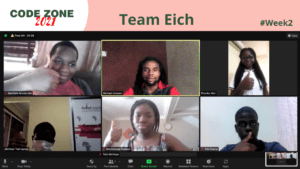
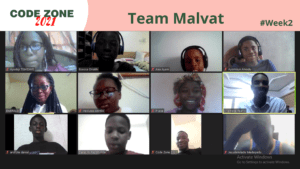
This year’s edition was quite exciting and  intense for us as organizers as we had to manage both In-person and Virtual classes  at the same time. We had 3 classes hold simultaneously and for ease of administration and  identification of the students we named each class after Programmers:

  • In- person Class for HTML & CSS  we named Team Babbage
  • Virtual Class for HTML & CSS we named Team Malvat
  • Virtual Class for JavaScript we named Team Eich

Code Zone Team Malvat

Code Zone Team Malvat

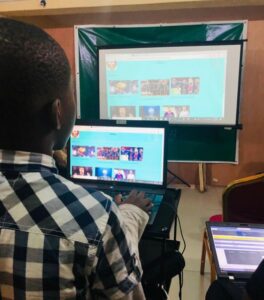
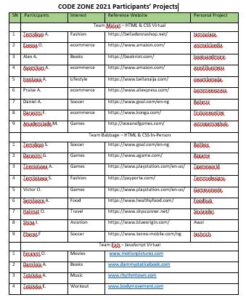
In line with our practice each participant had to apply their learning in their area of interest which we have come to appreciate that it makes assimilation easier for all participants. The areas of interest showcased through the presentations of these young ones were Soccer, Fashion, Books, Music, Games, Aviation, Movies, Travel, ecommerce and Lifestyle. The amazing display of creativity by the children through their choice of images, page layout and colour combination among other things made the guests go wow!

Code Zone 2021 Project

Participants project

One of the many things that continues to give us joy on the project are those moments when these children write their  code and it works, the joy that exudes from within them cannot be bought, here  are some moments in pictures, most of our of the participants had no clue on what coding was like before they got on the program, in all there were 22 participants

The Program was concluded on with presentations from  members of each team, the beauty of the presentation for us is that beyond the coding that the kids have learnt and want to showcase, its an opportunity for them to develop the confidence to face an audience, they also get to take questions and most importantly get feedback on their work so they can improve on it if they choose to go further.

Code Zone 2021 Presentation Day

Code Zone 2021 Presentation Day

‘The success for this year can first be attributed to God and the amazing efforts of the volunteer instructors namely Ifeanyi Chiemeke, Michael Umoren and Biose Isichei. It’s  also a good opportunity to say thank you to parents that registered their children as well as individuals who sponsored the registrations of a number of children and overall the Emerald Zone team that ensure all the behind the scenes activities move successfully; Said Mrs Akinloye Olufunke

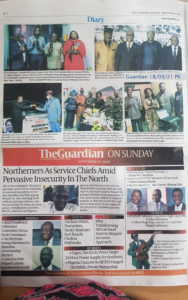
Feedback from parents have been positively overwhelming and captured for future reference, we also got a couple of mentions in the papers

Code Zone 2021 Testimonial

Code Zone 2021 Testimonial

Code Zone 2021 The Nation

Code Zone 2021 The Nation

Code Zone 2021 Vanguard

Code Zone 2021 Vanguard

Code Zone 2021 Telegraph

Code Zone 2021 Telegraph

Code Zone in The Guardian

Code Zone 2021 Guardian

Code Zone is an annual program powered by Emerald Zone with the mission of helping the young ones acquire coding skills at little or no cost in order to prepare them as they grow into the world where technology takes the lead.

Leadership Models that produce Powerful Leaders

August 19, 2021 in Business, motivational

Leadership Models produce great leaders and they have a great impact on the success of an organization, their habits, action and decisions can make a considerable contribution to the organization’s success. It is expected that a leader should have superior characteristics, which can inspire employees to achieve an organization’s goals.

Hence, such traits as a sense of community, responsiveness, honesty, creativity, confidence, or a positive attitude towards workers create leadership models for a powerful leader.

So what are these models, and how do they work?

1. Transformational

When a leader follows the transformational model of managing employees, they can provide quite effective support of its operation by inspiring workers.

Although such managers can be considered quite demanding, they motivate individuals to perform their job duties “beyond the expected levels” and “think beyond self-interest” since they show “positive qualities and ethics,” as Opoku and Ahmed noted in Leadership and Sustainability in the Built Environment.

Such a model of leadership is quite effective in achieving organizational goals.

Key Traits of Transformational Leaders

  • Inspiring
  • Demanding
  • Motivating
  • Positive
  • Focused

2. Charismatic

The charismatic leadership model is no less effective than a transformational one since it also includes creating enthusiasm for the team.

However, in contrast, this one implies that a leader shapes other people’s values instead of making them work beyond requirements.

So a charismatic leader can achieve a company’s goals via personal “characters and behaviors” because they are communicative and responsive.

Key Traits of Charismatic Leaders

  • Values Focused
  • Great Communicators
  • Responsive to Others
  • Engaging
  • Unifying

3. Ethical

Ethical leadership is a useful model to manage a team. An ethical manager’s personality consists of honesty, empathy, and being principled.

Consequently, such a leader follows their own ethics, providing employees with fair rewards and reasonable criticisms.

Moreover, ethical leaders are good at decision-making because their thinking is primarily moved by logic and justice, but not always emotions and feelings.

There may be no doubt that the manager, following an ethical leadership model, will perform consistently for the team and the company’s goals.

Key Traits of Ethical Leaders

  • Honest
  • Moral Standards
  • Truthful
  • Fair
  • Virtuous

4. Laissez-faire

A laissez-faire model of leadership contains both the pros and cons of its implementation.

On the one hand, laissez-faire leaders let their employees do the job and make decisions by themselves. And it can be considered as a positive and beneficial action when workers are entirely educated, experienced, and skilled.

On the other hand, such passiveness in performing leadership duties can lead to such an issue as uncontrolled production. I can note that laissez-faire leaders have a lack of motivational influence on employees.

For instance, when the manager takes a small part in performing a job, their opinion about work can be considered insufficient.

Key Traits of Laissez-Fair Leaders

  • Hands Off Style
  • Self Directed Teams
  • Individual Freedom of Choice
  • Push Decisions Down
  • Easy Going
Leadership

Leadership Models produce great leader

5. Bureaucratic

The bureaucratic leadership model is quite useful in the field of production. Such leaders are primarily moved by established rules, standards, and norms.

Thus, while working with mechanisms requires following safety regulations and properly using the equipment, the bureaucratic leader can control these processes effectively.

However, it is also necessary to take into account that the bureaucratic leadership model has a lack of flexibility. So it can harm performance if the leader works with creative tasks.

Key Traits of Bureaucratic Leaders

  • Rules
  • Regulations
  • Status Quo
  • Controlling
  • Inflexible

6. Democratic

In contrast to more passive leadership models like laissez-faire and bureaucratic, a democratic model can really motivate team members to work effectively. This model goes about involving employees in the decision-making process.

So employees become more motivated to work, knowing their mission at a company. Even though such a model of leadership can lead to slow performance, the results pay off.

Being a democratic leader can be used in various fields of activity, both creative and routine.

Key Traits of Democratic Leaders

  • Motivating
  • Inclusive
  • Self Governing
  • Treats Everyone Equally
  • Compromising

7. Autocratic

One more model of leadership is autocratic, which is quite different from the above-noted models.

To exemplify, if a person follows the autocratic model, their team members will not have any chance to make suggestions concerning work.

While in creative work, the autocratic leadership model is not an effective way to manage employees; a routine job with no necessity for specific skills can benefit from such an approach.

However, my personal experience has shown that an autocratic leader lacks strong communication with employees, which harms relations between workers and managers.

Key Traits of Autocratic Leaders

  • Decisive
  • Total Control
  • Authoritative
  • Dictatorial
  • Domineering

Organizational Goals

In conclusion, it is worth saying that the listed models of leadership are effective in performing management. It is evident that all of them can not be without cons but can be implemented in all fields of activity.

These models help to build strong company culture company culture 

June 5, 2021 in Business, technology, Upskilling

How VPN works.

Virtual Private Network (VPN) describes the opportunity to establish a protected network connection when using public networks. VPNs encrypt your internet traffic and disguise your online identity. This makes it more difficult for third parties to track your activities online and steal data. The encryption takes place in real time.

How does a VPN work?

A VPN hides your IP address by letting the network redirect it through a specially configured remote server run by a VPN host. This means that if you surf online with a VPN, the VPN server becomes the source of your data. This means your Internet Service Provider (ISP) and other third parties cannot see which websites you visit or what data you send and receive online. A VPN works like a filter that turns all your data into “gibberish”. Even if someone were to get their hands on your data, it would be useless.

Benefits of VPN connection

  • Secure encryption
  • Disguising your whereabouts 
  • Access to regional content
  • Secure data transfer

Reason to use VPN

Your ISP usually sets up your connection when you connect to the internet. It tracks you via an IP address. Your network traffic is routed through your ISP’s servers, which can log and display everything you do online.

Your ISP may seem trustworthy, but it may share your browsing history with advertisers, the police or government, and/or other third parties. ISPs can also fall victim to attacks by cyber criminals: If they are hacked, your personal and private data can be compromised.

This is especially important if you regularly connect to public Wi-Fi networks. You never know who might be monitoring your internet traffic and what they might steal from you, including passwords, personal data, payment information, or even your entire identity.

Features of a VPN solution

  • Encryption of your IP address: The primary job of a VPN is to hide your IP address from your ISP and other third parties. This allows you to send and receive information online without the risk of anyone but you and the VPN provider seeing it.
  • Encryption of protocols: A VPN should also prevent you from leaving traces, for example, in the form of your internet history, search history and cookies. The encryption of cookies is especially important because it prevents third parties from gaining access to confidential information such as personal data, financial information and other content on websites.
  • Kill switch: If your VPN connection is suddenly interrupted, your secure connection will also be interrupted. A good VPN can detect this sudden downtime and terminate preselected programs, reducing the likelihood that data is compromised.
  • Two-factor authentication: By using a variety of authentication methods, a strong VPN checks everyone who tries to log in. For example, you might be prompted to enter a password, after which a code is sent to your mobile device. This makes it difficult for uninvited third parties to access your secure connection.

Some VPN Providers

How to install a VPN connection on your smartphone

  • Download the App
  • Log in with your account. Most apps will then guide you through the key functions of the VPN services.
  • Switching on your VPN, it’s just a touch of a button
  • Server switching is usually done manually if you want to fake your location. Simply select the desired country from the offer.
  • Advanced setup is available for users requiring a higher degree of data protection. Depending on your VPN, you can also select other protocols for your encryption method. Diagnostics and other functions may also be available in your app. Before you subscribe, learn about these features to find the right VPN for your needs.
  • In order to surf the internet safely from now on, all you have to do is first activate the VPN connection through the app.

We prepare adults and kids for the future through our annual training CODE ZONE, get ready to register for 2021 edition

CODE ZONE FOR TEENS 2020

October 17, 2020 in Training

Code Zone for Teens 2020 is a Success, Thank you to all participants!

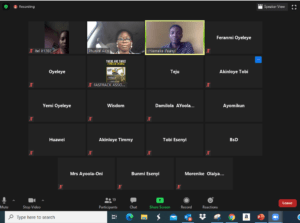
The second edition of Code Zone for Teens which held on September 1 – 30, 2020 has successfully been concluded. The amazing thing about this edition is that it is virtual.

Before it was organized, several considerations were put into consideration;  Age range (11- 17) to assess the concentration on virtual training, uninterrupted, and most probably unsupervised access to the internet, 3 hours of daily classes – VIRTUAL, etc. It just felt like a recipe for what cannot work. However, the team decided that if it is for ONE reason that the session is worth it, then we must hold it.

This year we had 7 participants and they further gave us a reason to continue the classes. Almost all the participants did not know jack about programming as when they joined and amazingly as on the last day when they had to present even their parents were in awe. Their areas of interest which determined the website they developed were e-commerce, public health, games & music.

What this edition has re-enacted for us;

          Do not underestimate the tenacity of children especially when they are interested. These Children were by their computers at 8 am daily for classes, some even had to do 7 am for specific reasons

          Collateral Learning: while they set out to learn a programming language, they also became ZOOM meeting experts, Internet strength experts (they had to try several networks to stay connected), Presentation skills: they had to present their project to a large audience so they had to compose their thoughts.

          Value can be spotted: Though many parents/guardians do not completely understand what the kids have been taught,  they are excited that the time was not wasted. Even if it’s for the discipline of waking up early, trying to complete a task, positive use of the internet. They are glad they got value.

Thanks to all that participated and to parents that allowed us to add value to their children. We look forward to the 2021 edition we know it will be Bigger & Better. We are confident that these kids will play on the world stage someday really soon.

LASU Graduates Signs up for Graduate Development Program.

October 15, 2020 in Graduate Development Programme, Professionalism, Training

LASU Graduates Signs up for Emerald Zone Graduate Development Program.

Personal Development is an individual decision. However, It is clear that we have to take steady steps to adjust to life in the new normal. It is therefore on this note that we applaud the Final Year Students & recent Graduates of Lagos State University for signing up for the Graduate Development Program organized by Emerald Zone.

Emerald Zone designed this monthly training program to empower the youths and prepare them for the workplace. The organization identified the gap in the expectation of the employer in a Talent and the level of preparedness of the fresh job seeker.

Dr. Igot Ofem, LASU Career Development Centre Coordinator said ‘Emerald Zone has been consistent in its efforts to contribute to the development of the Youths, their track record speaks for itself. Therefore, we are very comfortable to partner with them so that they can upskill our soon to be graduates & their immediate predecessors’.

The Graduate Development Program provides soft skill training that is very essential to fit in the workplace. Modules such as Personal Effectiveness, Business Eco-Systems, Ethics, etc are just a few among the areas covered.

The COO of Emerald Zone, Mr. Oladapo Akinloye is excited to have the LASU students on board ‘this is a confirmation of the value we consistently deliver, our resolve to consciously expand the base of employable youths is coming to fruition’.He further stated that the 4 weeks training program has expert practitioners as faculty that give relatable examples hence helping the participants learn clearly and understand faster.It is a platform we have developed for organizations to reach out and seek well-groomed talents that can be hired for their aptitude and attitude.

At the moment the Graduate Development Programs is Virtual and runs once a week for four weeks. Classes are intensive as it encompasses a lot of assignments and discussions. Individuals or groups are invited to reach out to @ezonelagos on Facebook & Instagram to register for the next cohort which is in November 2020 if not they can register for other months.

Potect yourself and your loved ones from COVID-19

April 11, 2020 in Business, Focus, Uncategorized

The coronavirus which is spreading like wildfire worldwide can be prevented if you protect yourself and your loved ones from iy – COVID-19. The battle to eradicate the pandemic is currently ongoing and even though there’s no cure for it yet, a lot of countries have begun managing the situation through aggressive awareness drives, and temporary suspension of activities which may enhance the spread of the virus. Here are some safety measures you need to keep in mind to protect yourself and your loved ones against the spread.

Wash hands with soap and water or use alcohol-based sanitizer: Maintaining good personal hygiene has been found to be effective in protecting against the virus. The World Health Organisation (WHO) has advised individuals to wash their hands for 20 seconds once in every 30 minutes or use a hand sanitizer with at least 70 percent alcohol content to clean hands in the absence of water.

Stay away If someone is coughing or sneezing: This is where social distancing comes into play. It’s advised to keep a distance of 6 feet from people, whether or not they are showing symptoms. This is because the virus can be transmitted through the respiratory droplets produced when an infected person coughs, sneezes or talks and these droplets can land in the mouth or nose of people who are nearby or possibly be inhaled into the lungs.

Don’t touch your face or the faces of others: Keeping our hands off our faces can prove a very difficult task. Oftentimes we find ourselves scratching our nose, wiping our eyes, biting our fingernails or even picking a pimple. While washing the hands often may be a protective measure against the virus, touching the face with dirty hands can get anyone infected. How? The virus lives on metals and plastics for days so, if your hands touch these surfaces and you touch your face without washing them, you could get infected.

Stay home for as much as possible: Your house is the safest place to be right now until the pandemic blows over. Remember that some people without symptoms may be able to spread the virus. So, by all means, stay at home and limit your contact with the outside world to the barest minimum.

Self isolate if you experience symptoms: As the experts have explained, It takes 14 days to fully detect the coronavirus symptoms so, if while at home you begin coughing, sneezing, or having a fever, it’s best to self-isolate and call the Nigerian Centre for Disease Control to get help. This simple act can help protect your loved ones against the virus.

Etiquette tips for Smooth Conference Calls

March 29, 2020 in Business, Professionalism

The Month of March 2020 will forever in history be recorded as when there was a
sudden spike in the use of Online Meeting Apps. The reason is not far fetched as
Covid-19 almost grounds the world to a halt in business activities, alternating means
have to be discovered while observing the mandatory Social distance.
Since more people now have to work remotely we have turned to Apps such as
Zoom, Free Conference Calls, Skype, Google Hangout, WhatsApp, OnSip etc to try
to get the business going. It is therefore important to give some tips on how to use
these correctly so that we don’t leave each other displeased with the non verbal
cues.

Here are some tips for making an effective and efficient conference call.
Send Notice Ahead: it is important to treat online meetings with agenda as a regular
meeting because discussions and agreements are official and legally binding. This
enables participants to prepare ahead – such as download the App if need be, check
their ear & mouthpiece, clear calendar, get the documents / references for the
meeting ready etc.
Confirm your Presence: When you join an online meeting it is important to
introduce yourself or you are introduced especially when the participants are not
your team members Even if the App will show the number of participants ensure
you register your presence with a comment or something especially if you joined the
meeting late.
Reduce or Eliminate Disruptions: It is disrespectful to others in the same call when
there are audible interruptions from someone’s end especially the type that can be
managed ahead e.g. loud ring tones friendly neighbour, screaming kids etc its only
fair to keep such interruptions away from your meeting as these will not likely happen
if you were physically in a meeting room. If you however have disruptions, then
apologize and ensure it doesn’t reoccur.
Be Present: Don’t just join the call because you are scheduled to be part of it and
nothing else. While you may want to multitask in order to optimise your time it is

important that you confirm your presence by contributing to the conversation when
the opportunity presents itself. There must have been a value expected from you to
have been invited for the meeting, this can’t happen if you are silent.
Be Audible: While you may be soft spoken remember that all attendees are relying
on technology to transmit the information to them, so if you have to increase the
intensity of your voice do it just for the period of the meeting. What you don’t want is
attendees asking you to repeat yourself over and over or you are being lectured on
how to use your microphone properly during the meeting.
Don’t Dominate the meeting: While you may be the host or you may naturally have
a deep voice you need to consciously not dominate the conversation all through the
meeting. This will be counter productive as you may not achieve any significant thing
since all attendees just have to agree with you so the meeting can come to an end.
Keep Meeting Official: Don’t fall for the temptation of drifting very far from the
objective and the Agenda of the meeting. There may be many other matters to
discuss, be disciplined enough to keep all matters official. Also do not make any
matter personal, disagreements may occur but it is important to take your official
position as opposed to turning it into a personality bout.
Recap agreements before closing: Before the meeting officially ends, ensure there
is a clear establishment of all that was agreed and the next steps to take. No
attendee would be happy to have spent time in a meeting with no cogent outcome.
Proper goodbyes can follow after agreements are established.