Tips To Improve Your Resume

September 29, 2025 in Uncategorized

Tips to improve Your resume is not just a piece of paper; it is your personal advertisement. In today’s competitive job market, recruiters spend only a few seconds skimming your resume for the very information they are looking for. That means your resume has to be flawless, professional, and tailored in order to capture their attention. Enhancing your resume can actually improve your chances of getting an interview if done right. In this guide, we will share practical tips to improve your resume so it becomes more impactful, ATS-friendly, and impressive to potential employers.


  1. Modify Your Resume to Each Job Application

And one of the major errors job seekers tend to make is using the same resume for every employer. Recruiters and hiring managers want to see a match between your skills and the job description. To improve your resume:

  • Read the job description closely.
  • Focus on relevant skills and experiences that correlate with the position.
  • Use the same terms listed in the job description.

Your resume is likely inclined to be ranked higher by an Applicant Tracking System (ATS) if it is tailored, which shows attention to detail.


  1. Adopt a Clear and Professional Format

Your resume should be easy to read and well-structured. Avoid using complicated fonts, large graphics, or odd layouts that could confuse ATS software or distract recruiters. Instead, use:

– A clean font such as Calibri, Arial, or Times New Roman.

– Clear section headings (e.g., Experience, Education, Skills).

– Consistent formatting with bullet points for readability.

A professional layout makes it easier for hiring managers to quickly scan your skills and qualifications.


  1. Emphasize Accomplishments, Not Just Duties

Employers want to see the impact you made in your prior roles, not just a list of tasks. Focus on measurable results by using the STAR method (Situation, Task, Action, Result). For example:

Rather than writing: “In charge of overseeing the sales team.”

Write: “Managed a ten-person sales team and raised revenue by 20% in just five months.”

A measurable achievement demonstrates value and strengthens your resume.
Tips To Improve Your Resume

Tips To Improve Your Resume

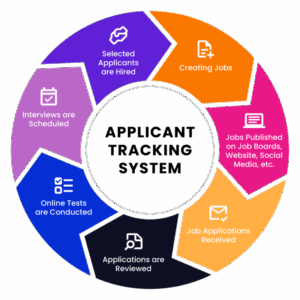
  1. Applicant Tracking Systems (ATS) Optimization

ATS is used majorly by medium scaled to large scaled organization to filter out resumes before a recruiter sees them. To ensure your resume passes ATS screening:

– Include relevant keywords from the job description.

– Avoid graphics, text boxes, and images.

– Use standard section headings like “Work Experience” and “Education”.

– Save your resume in Word or PDF format, unless otherwise specified.

An ATS-friendly resume ensures you do not get rejected before your skills are even reviewed.


  1. Keep It Brief and Relevant

Recruiters don’t have much time to go through resumes. Ideally, your resume should not exceed two pages. Focus on the most recent and relevant experiences. Provide a brief summary of previous positions for professionals with more than ten years of experience. Remember, quality is more important than quantity.


  1. Emphasize Transferable and Soft Skills

Employers’ value technical proficiency, but they also value soft skills like leadership, teamwork, communication, and flexibility. Include a skills section that highlights both technical and transferable skills. Use examples in your work history to illustrate these skills in action.


  1. Use Strong Action Verbs

Your resume’s impact can be affected by the language you use. Strong action verbs like “Led,” “Developed,” “Implemented,” “Achieved,” or “Designed” are good ways to start bullet points. This communicates initiative and results. Avoid passive language, which can weaken the impression you leave. check out on Resume Review class


  1. Include a Professional Summary

Instead of an outdated objective statement, use a professional summary at the top of your resume. This should be 3–5 sentences highlighting your key achievements, skills, and career goals. Tailor this section to the role you are applying for to immediately capture the recruiter’s attention.


  1. Showcase Continuous Learning and Certifications

Employers value candidates who invest in personal and professional growth. Highlight certifications, training programs, or workshops you have completed. For example:

– Certified Project Management Professional (PMP).

– Google Analytics Certification.

– Ongoing training in Data Analysis or Digital Marketing.

This signals that you are proactive and adaptable in an evolving job market.


  1. Proofread and Seek Feedback

A resume with spelling or grammar mistakes leaves a negative impression. Use tools like Grammarly or Microsoft Word’s spelling and grammar checker, but also ask a mentor or colleague to review it. A fresh set of eyes may spot errors or suggest improvements you overlooked. check here


Conclusion

Improving your resume is an investment in your career success. By tailoring your application, highlighting achievements, ensuring ATS compatibility, and maintaining professionalism, you increase your chances of landing interviews. Remember, your resume should tell a story that positions you as the ideal candidate. With these tips, you can craft a document that stands out in today’s competitive job market.



How Continuous Learning Keeps Business Competitive

September 23, 2025 in Uncategorized

Competitive advantage no longer depends only on goods, prices, or marketing tactics in the fast-paced business world of today. Rather, it is becoming more and more linked to people: the staff members who solve difficult problems, foster innovation, and provide customer experiences. Employees in organizations must constantly adjust to new business models, changing market demands, and emerging technologies if they are to stay resilient and relevant.
This is where continuous learning comes in. Far from being a corporate buzzword, continuous learning has become a strategic necessity. In addition to being more inventive, companies that make investments in professional development, upskilling, and reskilling are also better positioned to hold onto top talent, lower operational risks, and sustain long-term growth.

1. Why Continuous Learning Matters
The world of work is evolving at an unprecedented pace. Skills that were in demand five years ago may already be outdated today. According to industry research, over 50% of employees will need significant reskilling and upskilling in the next three years due to technological advancements like automation and artificial intelligence.
This means one thing for businesses: without a culture of lifelong learning, organizations risk losing their competitive edge and employees risk falling behind. Teams that engage in continuous learning are more flexible and able to satisfy changing client and business demands.
2. The Link Between Learning and Innovation
Competitiveness depends on innovation. Curiosity, experimentation, and creativity are fostered by companies that support continuous learning. Workers who are exposed to new information and viewpoints are more likely to come up with original ideas and find creative answers to problems.
For instance, tech firms that make significant investments in ongoing education, through innovation labs, design thinking workshops, and coding boot camps, frequently take the lead in creating ground-breaking goods and services. Innovation is a natural outcome when learning is ingrained in company culture.
3. Upskilling and Reskilling for the Future of Work
Jobs in many industries have been redefined by the rise of digital transformation. While some roles run the risk of becoming outdated, others, like those in data analytics, cybersecurity, and artificial intelligence, are developing quickly. Businesses need to dedicate themselves to both in order to stay competitive:
• Upskilling: It is the process of improving an employee’s present abilities to increase their effectiveness in their positions.
• Reskilling: It is the process of educating staff members to assume completely new responsibilities that correspond with changing business requirements.
Businesses can lessen their reliance on external hiring, which is frequently expensive, time-consuming, and unpredictable, by concentrating on their own employee development. Rather, they create a workforce that is future ready and can adapt easily.
4. Enhancing Employee Engagement and Retention
Continuous learning helps people as well as businesses. Employees are more motivated, engaged, and loyal when they see their company investing in their growth.
Studies show that organizations with strong learning cultures report higher employee retention and lower turnover rates. Employees now remain with organizations where they perceive career development opportunities rather than just job security. By supporting professional growth, businesses strengthen both morale and retention, which translates into a stronger bottom line.
5. Building a Learning Culture
It takes more than just holding periodic training sessions to establish a learning culture. It is about embedding learning into the DNA of the organization. To achieve this, leaders must:
• Encourage employees to take ownership of their career development.
• Provide access to e-learning platforms, mentorship programs, and workshops.
• Acknowledge and honor the sharing of knowledge and the development of skills.
• Make learning part of daily work practices rather than a one-time occurrence.
Employees are encouraged to experiment and take chances when learning is viewed as a shared value, which increases business competitiveness.
6. Leveraging Technology for Learning
Learning is now easier than ever thanks to the powerful tools available to modern businesses. Digital learning platforms, mobile apps, webinars, and virtual classrooms allow employees to learn at their own pace, anytime and anywhere.
Personalized learning paths can be created with the use of Artificial Intelligence (AI), checkout this article  which suggests training courses according to each employee’s particular career objectives and skill gaps. By embracing digital learning solutions, companies can scale professional development efficiently while reducing costs.
7. Continuous Learning as a Competitive Advantage
Prioritizing learning offers organizations a number of distinct advantages:
• Agility: They quickly adjust to shifting market conditions.
• Innovation: They come up with original solutions that are difficult for rivals to match..
• Talent Attraction: They attract ambitious professionals who value growth.
• Resilience: They are better prepared to weather economic downturns and industry disruptions.
In short, learning becomes a competitive advantage. In a market where products and services can be replicated, a skilled and adaptive workforce cannot.
8. Measuring the Impact of Continuous Learning
Organizations must assess the impact of continuous learning in order to optimize its advantages. Useful metrics include:
• Employee performance and productivity improvements.
• Innovation rates (e.g., new ideas, patents, or solutions created).
• Retention and turnover statistics.
• Customer satisfaction and loyalty scores.
When businesses track these outcomes, they can refine their learning strategies, ensuring that investments in training and development deliver measurable results.

Check here for continuous learning

Conclusion
Continuous learning is the key to long-term business success in a world that is characterized by constant change. Companies that commit to upskilling, reskilling, and cultivating a growth culture are not only more innovative but also more competitive.
By leveraging technology, encouraging employee engagement, and embedding lifelong learning into everyday work practices, businesses can stay ahead of the curve. The future will belong to organizations that recognize learning not as an option but as a strategic advantage.

When Leaders Cross the Line: HR’s Role in Managing Executive-Level Ethical Breaches

July 19, 2025 in Uncategorized

Yes leaders do cross the line, recent Coldplay concert has reminded us. While leaders are supposed to show the way, lead with integrity, be an inspiration they do cross the line at times as humans. In today’s interconnected world, personal and professional boundaries can easily blur—especially in the age of social media and viral content. When top executives are caught in compromising situations, the fallout can extend beyond personal reputations and seep into organizational culture, employee trust, and public image.

Such is the case in the recent scenario involving Astromer, a leading tech solutions company, where the CEO Andy Byron and Head of HR Kristin Cabot were publicly seen engaging in a romantic affair during a Coldplay concert—an event that quickly made headlines and flooded online platforms. The issue isn’t merely about a relationship; it’s about conflict of interest, ethical leadership, and how organizations handle internal crises involving those at the helm event though the Coldplay concert could have been attended in private capacity.

Why This Matters

In most organizations, the CEO and the Head of HR are expected to be custodians of company culture, ethics, and values. When these individuals are seen crossing boundaries, it creates ripple effects—raising questions like; Is there favoritism?  Were professional decisions compromised? How can other employees trust HR processes moving forward?

As profession HR practitioners and consultants to corporate organizations, Emerald Zone is putting out this  professional HR roadmap for addressing such incidents to achieve integrity, transparency, and fairness.

Step 1: Immediate Internal Review

Once a public incident occurs, the first step is not silence but structured inquiry. The Board of Directors or an independent ethics committee should initiate a confidential but firm review into:

  • The nature of the relationship
  • Possible breaches of company policy
  • Impact on reporting lines and decision-making processes

This ensures that leadership is held accountable and that internal standards apply to everyone equally.

Step 2: Activate Conflict of Interest Protocols

A romantic relationship between a CEO and the Head of HR is a direct conflict of interest, especially if one party has influence over the other’s professional standing. Organizations must review:

  • Whether any decisions were influenced by personal bias
  • If HR processes (recruitment, appraisals, grievances) have been compromised
  • The power dynamics involved

Based on findings, temporary reassignment, role separation, or administrative leave may be necessary to preserve process integrity during investigation.

Step 3: Transparent Communication

Employees and stakeholders will talk. The role of leadership is to control the narrative responsibly. An internal memo or town hall, acknowledging the situation without disclosing personal details, helps:

  • Prevent misinformation
  • Reassure staff that proper procedures are being followed
  • Reinforce organizational values of professionalism and accountability

Remember: silence breeds speculation; clarity breeds confidence. It would also be necessary to reiterate that attending social events like Coldplay concerts in personal capacity cannot be frowned at.

Step 4: Reinforce Policy & Ethics Training

This incident should serve as a teachable moment. HR should lead a company-wide refresher on ethics, workplace relationships, and professional boundaries. For senior executives, the training should highlight:

  • The importance of model behavior
  • Legal and ethical consequences of power-imbalanced relationships
  • The zero-tolerance approach for policy breaches

Step 5: Support the Culture and the People

Regardless of outcome, the incident may have created an emotional or psychological ripple effect among employees—ranging from disillusionment to workplace tension. HR should ensure:

  • Open channels for feedback
  • Anonymous reporting options if employees feel impacted
  • Counseling or EAP services are available for affected staff

A healthy culture is not just about rules—it’s about care and trust.

Conclusion: Lead with Principles, Not People

The Astromer incident at the Coldplay concert may have been a moment of personal misjudgment, but for the organization, it’s a chance to reaffirm that no one is above accountability. HR professionals and business leaders must remember: ethics at the top define trust throughout the organization.

In an era where reputations are shaped in real time, organizations must act swiftly, fairly, and transparently to uphold their integrity—not just for the headlines, but for the people who rely on them every day.

HR for Startups – 6 best practices

September 7, 2024 in Blog, Uncategorized

We are considering HR for Startups because Entrepreneurs often have a hang of their business model and development process etc. but they rarely have the same level of understanding on workforce planning.

Individuals are the backbone of any organization, and when you’re a little group, they matter considerably more. You need to hire top talent and create a working environment that encourages each employee to perform at their best if you want to realize your vision.

Human resources management and the hiring process are often overlooked by startup founders. However, you must plan for your workforce if you want to transform a game-changing idea into scalable, repeatable business success.

Best strategy, HR for startups Early consideration of HR procedures is essential. Predicting your team’s growth, creating a compensation budget, and laying the groundwork for a vibrant and productive workplace culture are all important components of a successful HR strategy.

Specifically, your HR policies define and aid in the implementation of: your organization’s structure, performance management, recruitment and hiring procedures, employee surveys and feedback, training, compliance with the law, compensation for workers, and benefits for employees are all important factors in employee retention. Although you do not need an entire HR department, you should have at least one person. Instead of delegating HR responsibilities to a different position, it is also advantageous to hire someone with HR expertise.

An HR advisor can help you find the right people, organize the interview process, and negotiate offers to keep employees for the long run. You might want to think about hiring a consultant to assist you in developing a fundamental hiring strategy and ensuring that you are in compliance with federal employer requirements if you do not have the resources to hire a full-time HR manager. There is opportunity for training.

HR for Startup, 6 best practices

  1. Sort out essential documents and legal compliance Before you start hiring employees, you need to think about whether you are in compliance with federal employment laws. Employer compliance is the bare minimum stage of HR strategy. In particular, you ought to become familiar with the following federal regulations

Equal Employment Opportunity (EEO), Fair Labor Standards Act (FLSA), Affordable Care Act (ACA), and Equal Employment Opportunity (EEO) It is essential to check the website of your state’s Department of Labor to determine whether you are required to adhere to any local or regional regulations. Your hiring contract and proof of eligibility to work in the United States are two of the most important documents you should keep on file for every employee you hire. Non-disclosure agreements (NDAs) and ownership of work agreements may also be required of employees.

If an employee leaves for another employer, they can’t take valuable product or business model information from you because of an NDA. On the other hand, an ownership of work agreement guarantees that you will own the intellectual property (IP) that employees create while working for you. Without these documents, it can be more difficult to obtain funding, which is why they are especially helpful to startup founders.

  1. Thee second thing to consider in HR for Startups is to Establish payroll After hiring team members, you need to pay them. You have the option of automating payroll with software or manually handling it. Investing in payroll software early can significantly cut down on the amount of time spent processing paychecks. Additionally, a digital audit trail is generated automatically. Expert advice: Choose payroll software for startups that includes HR management features to keep all of your employees’ data in one place and make workforce expansion easier. Software providers that offer onboarding features or allow employees to request time off are two examples.
  2. Establish an HR department In the end, the best time to establish a dedicated HR team depends on your growth rate and financial resources. One person can start an HR team if they bring the necessary expertise and aren’t already working in another position. “The sweet spot for bringing an HR expert onboard is when you’ve grown to around 20-30 people… [But] earlier may be appropriate if you plan to scale quickly,” says Kate Kandefer, co-founder of SEO platform SEOwind.
  3. Create a hiring forecast or team road map that is in line with your company’s fundraising plans and strategic goals to help with staffing needs as your business grows. Ideally, you should have projections for three and six months that you can revisit and adjust. Your forecast should at the very least include a salary estimate and a list of the positions you intend to fill and when. You can avoid gaps in essential staffing and know how much of your revenue or funds raised will need to be allocated to recruitment and compensation if you have a clearly defined hiring plan.
  4. Create a recruitment handbook By defining your hiring procedure, you will be able to improve the candidate experience, train new recruiters as your business expands, and make talent acquisition repeatable and scalable. Your recruitment handbook doesn’t need to be over-engineered. It could be a living record that changes with you. Start with a basic version that includes the following guidelines: Publicizing open positions: Where to post open positions, templates for job applications and descriptions of the company’s culture and perks, and boilerplate text Recruitment roles and responsibilities: Who reviews applications, communicates with them, and ultimately makes hiring decisions? Interview procedure: The length and format of the interview, whether or not technical tests should be used, who should interview potential new hires (such as HR, managers, or peers), and a set of questions you ask each candidate to determine whether or not they are compatible with the culture of your workplace Resources for onboarding employees Silk Road Technology conducted a survey and found that, on a scale of 1-10, 27% of new hires rated their onboarding experience as 5 or worse, and 9% of employees even left their current employer as a result. Even if you don’t have the resources of a big company, you shouldn’t use an onboarding process that throws new employees into the deep end and hopes they learn to swim. Onboarding can boost employee engagement, performance, and retention when done correctly.
  5. The final recommendation in the HR for Startups is a successful onboarding program ought to give new employees a tour of the office or hold virtual meetups for remote workers to help them get used to the space. You should also have an employee handbook where you can document your company’s vision and core values. Give them access to the tools they need, like spreadsheets, knowledge bases, and software like Photoshop. Make them feel like they are a part of the team by having a company lunch or another get-together. Set clear expectations for their first 90 days of work with the help of their manager.

Recommended for reading: Effective recruitment

In addition, the handbook ought to provide new hires with information about the benefits, list the kinds of conduct that won’t be tolerated, and explain to employees how they can provide feedback, ask questions, or voice concerns. Any HR-related tools or programs for startups should also be included in this.

Nigeria We Hail Thee!

June 4, 2024 in Uncategorized

What do you know about New Nigeria National  Anthem!

“Nigeria, We Hail Thee “ is the national anthem of Nigeria, used from independence in 1960 until 1978, and then from 2024.
Nigeria’s former anthem, “ Arise, O Compatriots,” was adopted in 1978, replacing the previous one on 29 May 2024, Bola Tinubu signed a bill reinstating “Nigeria, We Hail Thee.

This new anthem was adopted as Nigeria’s first national anthem on October 1, 1960. The anthem’s lyrics were written by Lillian Jean Williams, a British expatriate who lived in Nigeria when it achieved independence. Frances Berda composed the music for it”

Here is the lyrics for you to learn and you can listen to the rhythm here

Lyrics of the  New National Anthem

Nigeria, we hail thee,

Our own dear native land,

Though tribe and tongue may differ,

In brotherhood, we stand,

Nigerians all, and proud to serve

Our sovereign Motherland.

Our flag shall be a symbol

That truth and justice reign,

In peace or battle honour’d,

And this we count as gain,

To hand on to our children

A banner without stain.

O God of all creation,

Grant this our one request,

Help us to build a nation

Where no man is oppressed,

And so with peace and plenty

Nigeria may be blessed.

Know more about our products 

Follow us on:
Facebook: @ezonelagos
Instagram: @ezonelagos
LinkedIn: @Emerald zone


Coding for Sustainability ends amidst applause from parents and other Stakeholders

September 23, 2023 in Uncategorized

Code Zone 2023 themed Coding for Sustainability has successfully come to an end amidst commendations and accolades from parent, participants and other stakeholders. This fifth edition of the annual summer coding program which commenced in 2019 and holds every August was themed Coding for Sustainability, the objective was to drive the consciousness of sustainability in the everyday lives of the participants, this can be said to have been met.

Code Zone 2023 ran through the month of August 2023, with both virtual and in-person classes holding every weekday for the one month. The program had thirty-one participants of it target audience being Teenagers and Pre-Teens enroll in in the available programs i.e. HTML/CSS, JavaScript and UIUX.

As a standard practice, participants after the intensive period of learning these new skills exhibited their knowledge by presenting their projects in their areas of interest, this varied from Sports, Fashion, Entertainment, to love for Dogs, Games, Music, Gadgets and so on. It’s been an amazing journey indeed. 

Team Montulli

Code Zone 2023

There were four teams and each named after fathers of technology; Team Ragget: Named after Dave Raggett is an English computer specialist who has played a major role in implementing the World Wide Web since 1992. Team Norman named after Don Norman, a psychologist and usability consultant who’s worked with Apple, HP, and the Nielsen Norman Group is often credited as the father of UX. Team Cooper named after Martin Cooper an American engineer that pioneered wireless communications industry, especially in radio spectrum management, with eleven patents in the field. Team Montulli named after Louis J. Montulli II a computer programmer who is well known for his work in producing web browsers. In 1991 and 1992, 

Team Cooper

Code Zone 2023

The Founder Mrs Olufunke Akinloye at the closing presentation talked about why Code Zone was started and the reason for having this year Themed Coding for Sustainability. ‘We are glad to be consistently achieving the objective of starting Code Zone which is to upskill Teenagers and Pre Teens with tech knowledge so that they can be active participants in the world they are growing into.’ She said.

Team Norman

Code Zone 2023

Olufunke further said ‘The participants did not only learn tech stills this one month, we are glad to say they got enlightened on the general idea of Sustainability i.e. making the world last longer and livable for generations after them. They got more understanding on the three Rs Reduce, Reuse, Recycle and the need to consider it before items are condemned as waste. Each participant had to create a mandatory Sustainability page as part of their project.

Team Cooper

Code Zone 2023

Mr. Eniola Ilesanmi, a parent of 2 participants in the Program said ‘I am awed at the amount of learning my children have been exposed to during this program. The enthusiasm the children display every morning waking up early to endure they don’t miss class despite being holiday period gives me great joy and is testament to the Value the program delivered to its participants. My children became Zoom experts overnight alongside the coding skills they acquired. I am very glad to have been a part of it and I am already looking forward to the next edition.

Mrs. Maria Akinfe, another parent and guardian of 8 participants said ‘I am glad my children and their friends were able to enroll for Code Zone this year. I am a returning parent as my children have participated in a previous edition so I have assurance that their time will be well spent. The additional value of exposing them to the concept of sustainability is what amazed me. So the children did not only leave the program with coding skills but a decision to Reduce, Reuse or Recycle Items which as a parent I intend to give them my utmost support’.

Code Zone 2023 as an initiative of an African Woman, got some support from the JAMII Femmes, an initiative of Coca Cola Foundation and Women in Africa to support African Women Entrepreneurs for sustainable impact. The entire team of Code Zone express gratitude for the support.

Work space available 


ChatGPT in Summary

April 30, 2023 in Uncategorized

ChatGPT is an artificial intelligence chatbot developed by OpenAI and released in 2022. It is built on top of OpenAI’s GPT-3.5 and GPT-4 foundational large language models and has been fine-tuned using both supervised and reinforcement learning. We thought to do a quick summary of what it is all about. 

How does it work? It is a general-purpose chatbot that uses artificial intelligence to generate text after a user enters a prompt, developed by tech startup OpenAI. The chatbot uses GPT-4, a large language model that uses deep learning to produce human-like text.

When did it get released? November 30, 2022 is when ChatGPT was released for public use.

What is the latest version? Both the free version of ChatGPT and the paid ChatGPT Plus are regularly updated with new GPT models. The most recent model is GPT-4.

Is it free? There is a free version that only requires a sign-in in addition to the paid version, ChatGPT Plus.

Who uses it? Anyone can use it! More and more tech companies and search engines are utilizing the chatbot to automate text or quickly answer user questions/concerns.

What is the difference between ChatGPT and a chatbot? A chatbot can be any software/system that holds dialogue with you/a person but doesn’t necessarily have to be AI-powered. For example, there are chatbots that are rules-based in the sense that they’ll give canned responses to questions. ChatGPT is AI-powered and utilizes LLM technology to generate text after a prompt.

Can it write essays?  Yes.

Can it commit libel? Due to the nature of how these models work, they don’t know or care whether something is true, only that it looks true. That’s a problem when you’re using it to do your homework, sure, but when it accuses you of a crime you didn’t commit, that may well at this point be libel. We will see how handling troubling statements produced by ChatGPT will play out over the next few months as tech and legal experts attempt to tackle the fastest moving target in the industry.

Does ChatGPT have an app? There is not an app available for iPhone or Android, but users have options to enable the chatbot on their mobile devices via their browser or a third-party app that uses ChatGPT’s public API.

What is the ChatGPT character limit? It’s not documented anywhere that ChatGPT has a character limit. However, users have noted that there are some character limitations after around 500 words.

What are some sample everyday uses for ChatGPT? Everyday examples include programing, scripts, email replies, listicles, blog ideas, summarization, etc.

What are some advanced uses for ChatGPT? Advanced use examples include debugging code, programming languages, scientific concepts, complex problem solving, etc.

How good is it at writing code? It depends on the nature of the program. While it can write workable Python code, it can’t necessarily program an entire app’s worth of code. That’s because it lacks context awareness — in other words, the generated code isn’t always appropriate for the specific context in which it’s being used.

Can you save a ChatGPT chat? Yes. OpenAI allows users to save chats in the interface, stored in the sidebar of the screen. There are no built-in sharing features yet.

Are there alternatives? Yes. There are multiple AI-powered chatbot competitors such as Together, Google’s Bard and Anthropic’s Claude, and developers are creating open source alternatives. But the latter are harder — if not impossible — to run today..

Where can I find examples of  prompts? Several marketplaces host and provide ChatGPT prompts, either for free or for a nominal fee. One is PromptBase. Another is ChatX. More launch every day.

Can it be detected? Poorly. Several tools claim to detect ChatGPT-generated text, but in our tests, they’re inconsistent at best.

Are the chats public? No. But OpenAI recently disclosed a bug, since fixed, that exposed the titles of some users’ conversations to other people on the service.

Who owns the copyright on created content or media? The user who requested the input from ChatGPT is the copyright owner.

Are there issues regarding plagiarism with ChatGPT? Yes. Text-generating AI models like ChatGPT have a tendency to regurgitate content from their training data.

Code Zone presents Teens and Tech

March 8, 2023 in Uncategorized

It’s March 2023 already and first quarter is almost over, join us as Code Zone Presents Teens and Tech, this is because we are deliberate about our vision of grooming a next generation that will actively participate in the future they are growing into.

Teens & Tech is a virtual conversation platform to enlighten and educate stakeholders of this next generation i.e. parents, Teens, Pre Teens, school administrators etc on the need for the generation to embrace technology. simplee steps that can make impact.

The likes of Mark Zuckerberg. Bill Gates & Jack Dorsey have something in common with Matt Mullenweg, Juliath Brindak, Nick D’Aloisio etc and that is they all started their businesses while they were teenagers. Technology has become more accessible and simplified so we need to nudge our teenagers to embrace it early so they can start the process of becoming active participants in the world they are growing into.

Code Zone is inviting you – as a parent, teenager or school administrator – to join us on Sat. March 11, 2023 by 5.00pm for this webinar on Zoom as we discuss opportunities available in tech that our teenagers can access and begin to leverage.

It’s free but registration https://rb.gy/nffd8m is required so register now.

Revered Nigerian Authors with great writing skills

March 7, 2023 in Uncategorized

Writing skills is a highly revered skill and writing as a profession is an enviable one, writing birth authors and Nigeria has produced an abundance of well-known ones over time. In a serene workspace such as the one Emerald Zone provides, writing is one of the many things that get easily achieved, our appreciation of writers informed our decision to name some of our workspaces after Wole Soyinka, Cyprian Ekwensi, Elechi Amadi, Buchi Emecheta, Flora Nwapa and Femi Osofisan. This write up is therefore dedicated to these renowned writers.

Akinwande Oluwole Babatunde Soyinka

Popularly known as Wole Soyinka the first Black African man to be awarded the Nobel prize for literature was born on July 13th 1934. With great writing skills, he is a Nigerian Playwright, novelist, poet, and essayist in the English Language who received the Nobel prize for literature in the year 1986, for “in a wide cultural perspective and with poetic overtone fashioning the drama of existence. He sometimes wrote of modern West Africa in a satirical style, but his serious intent and his beliefs in the evils inherent in the exercise of power were usually evident in his work as well. Soyinka attended Government college in Ibadan before graduating in 1958 with a degree in English from the university of Leed in England. Upon his return to Nigeria, he founded an acting company and wrote his first important play, A Dance of the Forest produced 1960 and published 1963 for the Nigerian independence celebrations. He also wrote several plays in a lighter vein, making fun of pompous, westernized schoolteachers in The Lion and the Jewel (first performed in Ibadan, 1959 and published 1963). His more serious plays include The Strong Breed (1963), Kongi’s Harvest (opened the first Festival of Negro Arts in Dakar, 1966; published in 1967), The Road (1965), From Zia, with Love (1992) and the Parody King Baabu (performed 2001 and published 2002) reveal his disregard for African authoritarian leadership and his disillusionment with Nigerian society as a whole. His best works exhibit humor and fine poetic styles as well as a gift for irony and satire and for accurately matching the language of his complex characters to their social position and moral qualities. After winning the Nobel Prize, he also was sought after as a lecturer, and many of his lectures were published- notably the Reith Lectures of 2004, as Climate of Fear (2004).

Cyprian Odiatu Duaka Ekwensi

One of Africa’s best short story writers of the 20th century and Novelist winner of Dag Hamtuarskjold International Merit award was born at Minna in Northern Nigeria on September 26, 1921. He later lived in Onitsha in the Eastern area. He was educated at Achimota College in Ibadan and at the Chelsea School of pharmacy of London University. He lectured in the pharmacy of Lagos and was employed as a pharmacist by the Nigerian Medical Corporation. Ekwensi married Eunice Anyiwo, and they had five children.

Ekwensi, noted for his great writing skills, began his writing Career as a pamphleteer, and this explains perhaps the episodic nature of his novels. This tendency is well illustrated by people of the city (1954), in which Ekwensi gave a vibrant portrait of life in the West African city. It was the first major novel to be published by a Nigerian. In 1960, two novellas appeared for children; The Drummer Boy and The Passport of Mallam Ilia were exercises in blending traditional themes with undisguised romanticism. Ekwensi was brought into the literary limelight nationally and internationally with his work which dwelled on the complexities of the urban society and the encounters of the rising middle class of urban Lagos in their struggle for survival. From Jagua Nana, 1961, to Jagua Nana’s daughter, a sequel to the former. Ekwensi made a graphic exploration of the life of the ordinary folks and the complexities of their existence. His other books include Burning Grass, 1961, Lokotown and other stories,1966, Divided we stand, 1988, king Forever, 1992, and cash on delivery, 2007. 

Emmanuel Elechi Daniel

Popularly known as Elechi Amadi was born on the 12th of May 1934, in Mbodo-Aluu, in Rivers State, Nigeria, he attended Government College, Umuahia (1948-1952), Survey School, Oyo (1953-1954), and then proceeded to study in the University of Ibadan (1955-1959), where he obtained a degree in Physics and Mathematics. It was while in the university, he adopted the name Elechi Amadi, which he felt reflected his Ikwerre heritage more than his birth name Emmanuel Elechi Daniel. He is an author of plays and novels which is generally about life in the African village, their customs, beliefs and religious practices before the contact to the western world.

Amadi was a writer in residence and a lecture at Rivers State college of education, where he also became dean of Arts, head of literature department and the Director of General Studies. He had his first publication in the year 1957 which was titled “Penitence” in a University of Ibadan Campus magazine called The Horn, edited by John Pepper Clark. Amadi’s first novel, The Concubine which was hailed as “an outstanding work of pure fiction” was published in London in 1966. After critically studying the novel, Alastair Niven wrote: “Rooted firmly among the hunting ad fishing villages of the Niger Delta, The Concubine nevertheless possesses the timelessness and universality of a major novel. The Concubine was later made into a film. Some of his other works include The Great Ponds, published in 1969, Sunset in Biafra, published 1973. In May 2004, a conference was later organized by the Association of Nigerian Authors, Rivers State to mark Elechi Amadi’s 70th birthday. For his last book, When God Came, Amadi turned for the first time to the genre of science fiction.

Florence Onyebuchi Emecheta

Also known as Buchi Emecheta was born July 21, 1944 in Lagos, Nigeria,  an Igbo writer with great witting skillswhose novels deal largely with the difficult and unequal role of women in both immigrant and African societies and explore the tension between tradition and modernity. She began writing stories based on her life including the problems she initially encountered in England. These works where first published in New Statesman magazine and where later collected in the novel In the Ditch (1972). This work was followed by Second-Class Citizens (1974). Both works were later included in the single volume Adah’s Story (1983). Those books introduce Emecheta’s three major themes, they include, the quest for equal treatment, self-confidence, and dignity as a woman. Somewhat different in style is Emecheta’s novel Gwendolen (1989; also published as The Family), Kehinde (1994) and The New Tribe (2000) which addresses the issues of immigrant life in Great Britain. Perhaps her strongest work, The Rape of Shavi (1983) is the most to categorize. Set in an imaginary African Kingdom, it explores the dislocation that occur when a plane carrying Europeans seeking to escape an imminent nuclear disaster crash. Emecheta who wrote an autobiography, Head Above Water (1986), and several works of children’s and juvenile fiction, was made an Officer of the British Empire (OBE) in 2005

Florence Nwanzuruahu Nkiru Nwapa,

Popularly known by her pen name Flora Nwapa is the founder of Tana Press in Nigeria and has great writing skills, the mother of modern African literature was born January 13, 1931 in Oguta, Imo State She was educated in Ogula Port Harcourt, and Lagos before attending university college in Ibadan, Nigeria (1953-1957), and the university of Edinburgh.

Flora Nwapa was the forerunner to a generation of African women writers, and the African woman novelist to be published in the English language in Britain. She achieved international recognition with her first novel Efuru, published in 1966 by Heinemann Educational Books. Flora, while never considering herself a feminist, was best known for recreating life and traditions from an Igbo woman’s viewpoint. She published African literature and promoted women in the African society. Her other books include Idu (1970) which centers on a woman whose life is bound up with that of her husband to the extent that when he dies, she seeks him out in the land of the dead; This is Lagos and Other Stories (1971), One is Enough (1981) and Women are Different (1986). Some of her novels that dealt with the Biafran conflicts include, Never Again (1975), Wives at War and other stories (1980).

Babafemi Adeyemi Osofisan

Popularly known as Femi Osofisan, born 16th of June 1946 in Erunwon, Ogun State, and was educated at the University of Ibadan, Dakar and Paris. He has great writing skills and has held several posts and won several awards, the most recent, the 2006 Fonlon-Nicholas Award bestowed annually on an African writer for excellence in creative writing and for contributions to the struggles for human rights. won prizes from the association of Nigerian authors (ANA) and was awarded the Nigerian National Order of Merit (NNOM) the highest academic prize in the country is a Nigerian Writer.

He is renowned for his criticism of societal issues, as well as for using surrealism and African traditional performance in some of his works. He frequently discusses the struggle between good and evil. A talented Nigerian critic, writer, poet, and dramatist, Femi Osofisan focuses much of his writing on political injustice and corruption. Midnight Hotel, Morountodun, Birthdays are not for the dying, Jagua Nana, Ladies of Owu, Ajayi Crowther, and many more are just a few of the more than 40 plays he has written and presented. His poems Dream Seekers on Driving Chain and Minted Coins were written under the pen name Okinba Launki. Femi Osofisan uses a variety of literary devices in her writing, including irony, humor, dance folktales, fables, and song.

We hope you find inspiration in some or all of their works and achievements, writing is a skill that can be learned, so go for your win. Meanwhile as stated earlier, we provide serene workspace that can help you come up with fantastic material.


Let’s Talk Marketing – 5 Difference between Product and Brand

November 23, 2022 in Uncategorized

Products and Brands have commonly been interchangeably used these are terms that every entrepreneur, organization, establishment will make use of for the life of the business. While a brand cannot exist without the product, the brand goes to become more valuable than the product. Gaining expertise includes understanding and using the right term in writing or in conversations.

According to Statista Apple the most valuable brand in the world is valued at  $ 947b as at Sept 2022 and other brands such as Google, Amazon, Microsoft and even Coca Cola, have become top brands that are recognizable by users and non-users. The valuation is not just a summation of the value of the tangibles e.g. for iPhone – the board, screen, microphone etc but a larger part is from the value of the intangibles i.e. perception, popularity, recognition and loyalty.

Definition of Terms

A product an article or substance that is manufactured or refined for sale.it can be physical or in virtual form. Brand refers to marketing concept that helps people identify a particular company, product, or individual.

Every product is made at a cost and each is sold at a price. The price that can be charged however depends on how much work has gone into building the brand. While the product may stay the same in composition, the brand can be relaunched or revamped to create excitement around it among the target market as well as keep it relevant within the segment.

5 Key Differences

  • As earlier said while brands cannot exist without products but they become more valuable than the cost of the composite elements of the products. According to macrotrends Coca Cola is currently worth $268.47b. It has achieved this through consistency, relevance and emotional connection. Coca-Cola sells the lifestyle, the emotion, and the association of the brand that people can relate to such that it shows enjoying the brand.
  • Products are GENERIC because anyone can produce it, however brands are UNIQUE and are not supposed to be reproduced without rights from the owners. A trademark is a sign capable of distinguishing the goods or services of one enterprise from those of other enterprises. Trademarks are protected by intellectual property rights.
  • Products satisfy our NEEDS in their barest form e.g. owing a car is a basic need for movement, wearing a shoe or drinking water are basic needs of humans. However, Brands satisfy the WANTS, it isn’t targeted at the basic but the higher level of the desire so e.g. buying a Rolls Royce is not to satisfy the need for movement but for status. In the same vein wearing a red sole shoe nor drinking water from a bespoke bottle has taken it beyond satisfying the need.
  • While products are MANUFACTURED/ designed, brands are BUILT. Products are a composition of specifications, Detergents, clothes, shoe are produced with specifications, and even Services are delivered with some specification which can be replicated by ‘anyone’. Brands on the other hand are built over a period, the owners support it by making the product deliver on its promise and consistently connecting with the customer.
  • Products as we can then see are RIGID, it can be likened to science or HTML in coding, products are a result of components or rules. Brands however are DYNAMIC, amenable, flexible which can then be likened Art or to CSS in coding. While consumers use the product they connect with the brand. Today the UAE has earned a reputation of one of the top countries in the world with amazing structures. Brands don’t get built overnight.

Conclusion

It is not enough to have a product, it is really important to build and keep build your brand that is how value is commanded.